

Concrete Resurfacing & Repair
Damaged, cracked, pitted or worn concrete may need repair or surface correction before a coating system can be considered. EPOFC assesses the condition of the slab and the intended flooring system before recommending the appropriate next step.
Cracks / Spalling / Pitting / Damaged edges / Surface correction
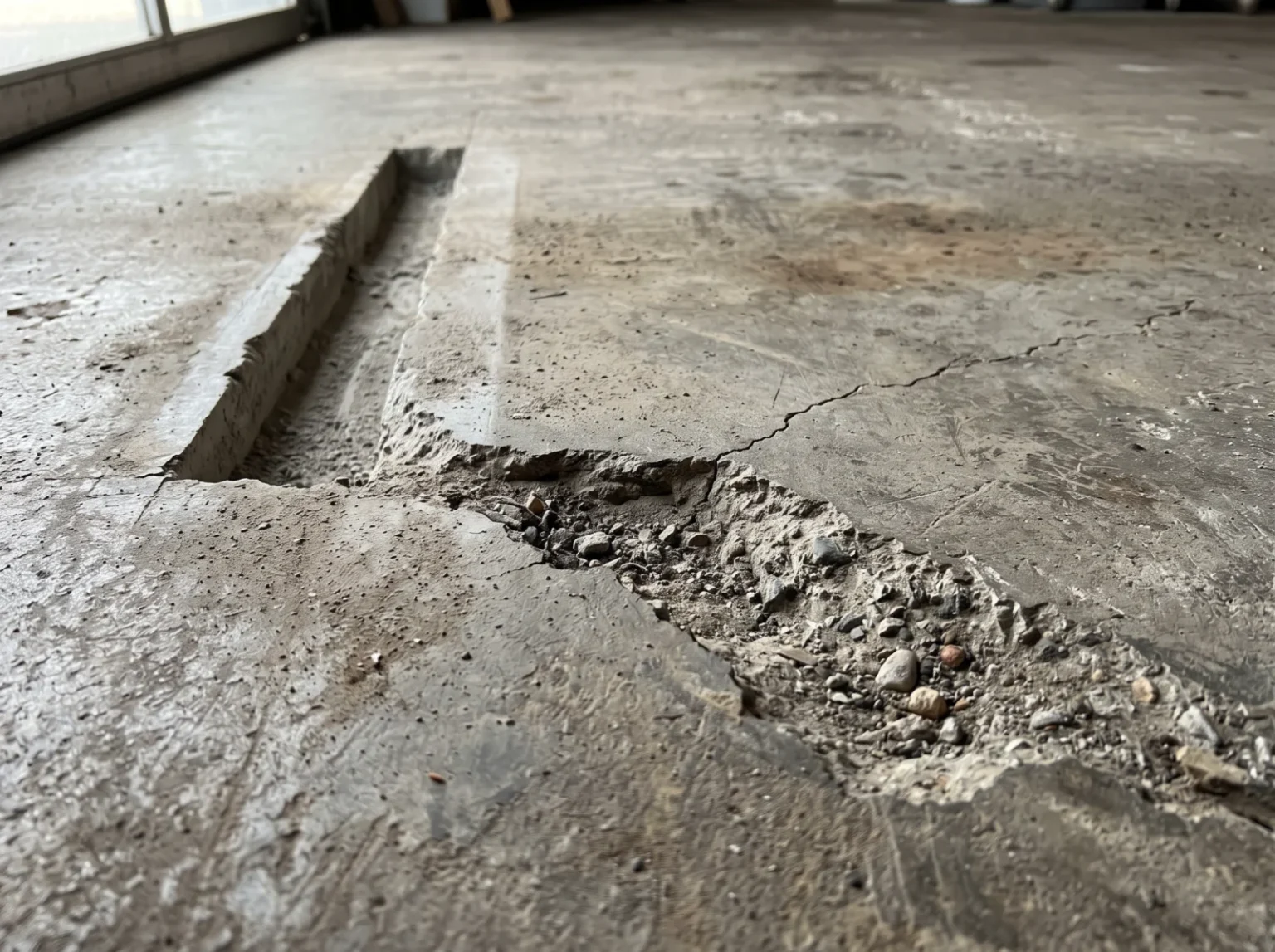
What Does Concrete Repair Involve?
Concrete repair addresses suitable localised defects or damaged areas identified during assessment so the floor can then be prepared for its intended use or subsequent coating system. The repair method depends on the type of damage, the condition of the surrounding concrete and the next stage of the project.
In practice that covers cracks that need assessment and treatment, chipped or spalled areas where material has broken away, damaged edges and transitions, pitted or deteriorated patches, and previous repairs that need checking. What is appropriate depends on the cause and the condition, not on the defect alone.
What Does Concrete Resurfacing Mean?
Concrete resurfacing focuses on correcting or improving the usable surface of existing concrete where appropriate. Depending on the project, this may involve localised repair or broader surface correction before a subsequent flooring or coating system. It does not mean rebuilding or structurally reconstructing the slab.
What is suitable for a given floor is confirmed after the concrete has been assessed.
Repair, Resurface Or Prepare?
These categories can overlap. The correct approach depends on the actual floor rather than the label used for the service.
Local Repair
Surface Correction
Surface Preparation
Common Floor Conditions That May Need Attention
Cracks
Cracks should be assessed, and treatment depends on the crack type and whether there is movement. Future movement may make cracking visible again.
Spalling or chipped concrete
Damaged material may require localised treatment. What is appropriate depends on the extent and the condition underneath.
Pitting or surface damage
Worn or damaged areas may require correction before a coating is considered.
Damaged edges
Edges, transitions or local breakouts may need repair depending on the flooring system selected.
Previous repairs
Existing repair materials should be assessed for condition and compatibility with the proposed system.
Cracks Are Not All The Same
Two cracks that look alike can need different work. What matters is what the crack is doing, where it sits and what is going over it.
Some cracks are stable and localised.
Some may reflect ongoing movement in the slab.
Treatment depends on the floor and the selected flooring system.
Treatment can address the existing crack or damage, but future slab movement may cause cracking or movement to become visible again.
Some cracks or movement conditions may require specialist assessment before a flooring system proceeds.
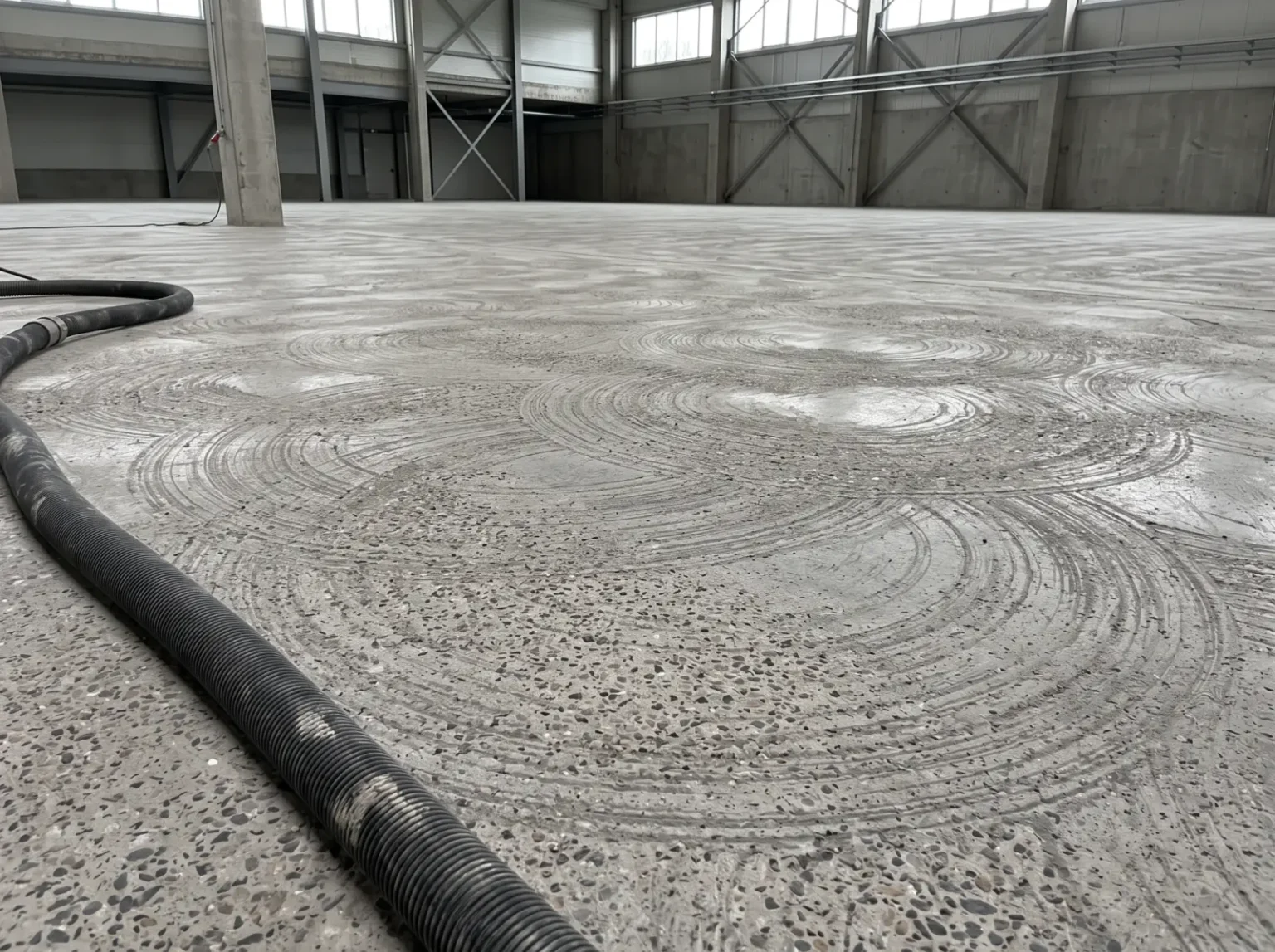
Spalled, Chipped Or Damaged Concrete
When concrete has broken away, chipped or deteriorated, the damaged area should be assessed before coating. Loose or unsuitable material may need to be removed and the area repaired or treated using a method appropriate to the damage and intended floor system.
Repair Before Coating
A coating system should not be used simply to hide defects that need attention. Where repair is required, it should be addressed as part of the preparation scope before the selected flooring system is installed.
Repair work can affect several parts of the project:
The preparation the floor needs once the repair is done.
The finished appearance, since repaired areas can read differently under a coating.
Coating continuity across the repaired and original concrete.
The overall scope of the work.
Project timing, because repair materials have their own requirements.
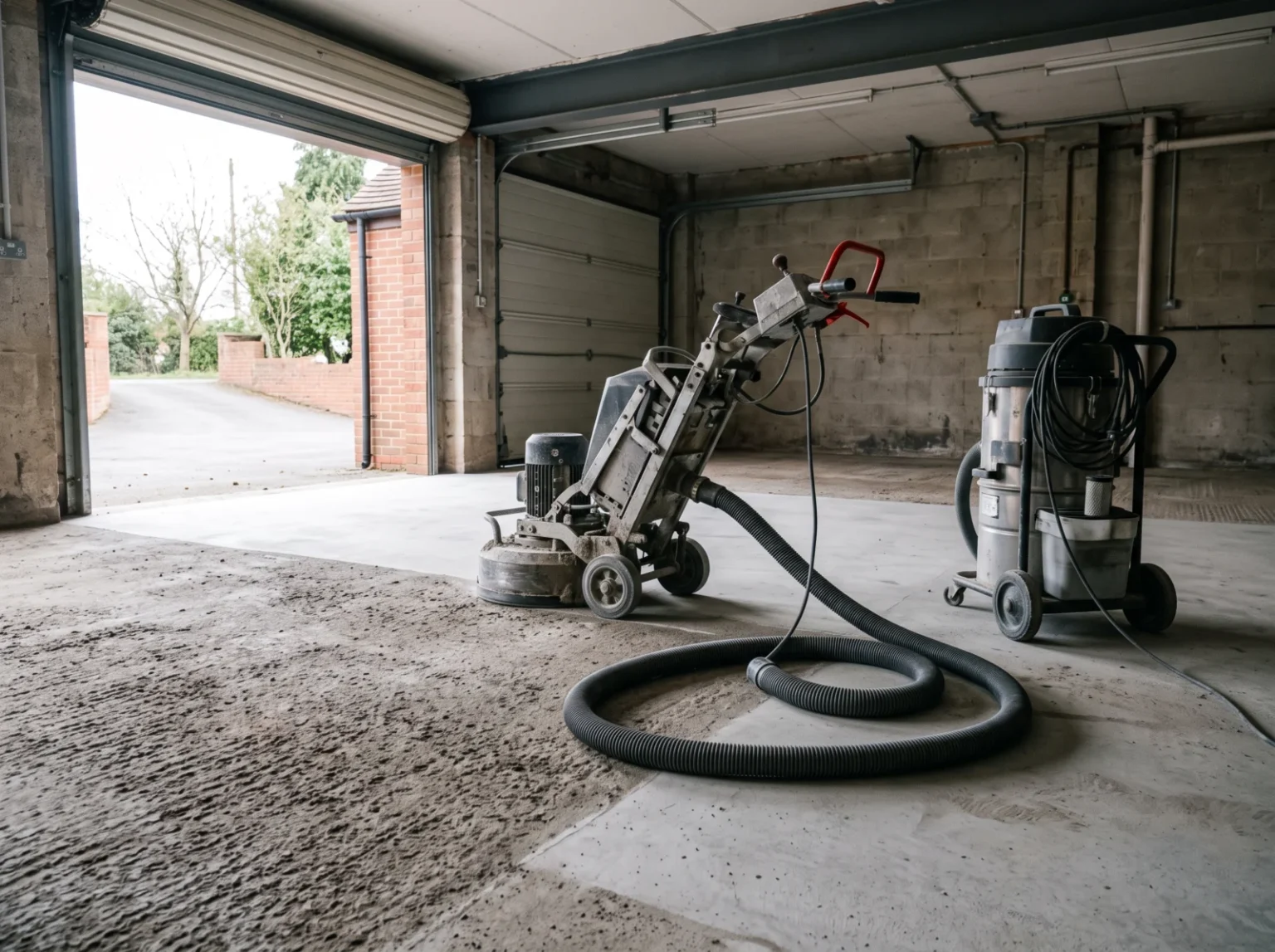
Repair And Preparation Work Together
Repair addresses the defect. Surface preparation then addresses the broader substrate requirements for the selected coating system.
Diamond grinding where appropriate, across the wider floor rather than only the repair.
Preparation of the existing concrete surrounding the repaired area.
The transition between repaired and original areas.
Surface condition once the repair has been completed.
Compatibility between the repair, the substrate and the coating.
How The Repair Scope Is Worked Out
Assess the damage
Review the location, extent and visible condition of the concrete.
Understand the next use
Consider whether the floor will be coated and how the area will be used.
Define the repair requirements
Identify which defects may need treatment and whether specialist input may be required.
Repair as appropriate
Carry out the agreed localised repair or surface work suited to the project.
Move to the next stage
Once suitable, preparation and the selected flooring or coating process can continue.
What Surface Repair Does Not Automatically Fix
Surface repair can address suitable localised defects, but it does not automatically resolve deeper structural or building-related conditions. Where the condition falls outside the scope of flooring-related repair, specialist assessment may be required.
Active structural movement
Foundation problems
Major slab movement
Significant structural deterioration
Ongoing moisture problems
Reinforcement corrosion
Unknown hazardous materials
What Condition Is The Floor In?
Damaged floors start in very different places. Five common starting points are shown below.
Minor local damage
May be suitable for localised assessment and repair ahead of the next flooring stage.
Multiple cracks or damaged areas
May require broader assessment before deciding the repair and preparation scope.
Worn or pitted surface
May require surface correction and preparation depending on the condition of the concrete.
Previously repaired floor
Existing repairs should be assessed for condition and compatibility with the proposed system.
Unknown condition
Send photos and project details. Customers do not need to diagnose the slab themselves.
Repair Across Different Flooring Applications
Garage floors
Cracks
Chipped edges
Old coatings
Worn concrete
Localised damage
Commercial floors
Worn traffic areas
Existing repairs
Damage across the area
Coating compatibility
Industrial / higher-use floors
Broader wear
Local damage
Existing coatings
Operational requirements
Specialist assessment where appropriate
What Affects The Cost Of Concrete Repair?
Two floors with similar-looking damage can require different repair scopes once the surrounding concrete and underlying condition are assessed.
Extent of damage
Number of repair areas
Type of defect
Floor area
Access to the floor
Condition of surrounding concrete
Existing coatings
Preparation required
Whether further flooring work follows
Complexity of the agreed scope
What If The Damage Looks Structural?
EPOFC’s focus is flooring-related concrete repair, surface preparation and coating work. Where cracking, movement or deterioration appears to involve a structural issue, specialist assessment may be required before flooring work proceeds. Send photos through and the appropriate next step can be discussed.
Frequently Asked Questions
From Repair To The Finished Floor
Once suitable repairs and preparation are complete, the project can move into the selected flooring or coating stage where appropriate.
Concrete Repair & Resurfacing Across Our Service Area
EPOFC currently focuses on flooring-related concrete repair, preparation and coating projects across Brisbane, Gold Coast, Logan and Ipswich. If your project is outside these areas, send through the suburb or postcode and current service availability can be confirmed.
Show Us The Condition Of Your Floor
Send through your suburb, approximate floor area and clear photos of the cracks, damaged areas, existing coatings or worn concrete. EPOFC can review the information and confirm the appropriate next step.
Related EPOFC Services
Explore related EPOFC services and preparation options.
Concrete Surface Preparation & Diamond Grinding
Assessment, mechanical preparation and dust extraction before coating.
Garage Epoxy & Flake Flooring
Flake and epoxy systems for garages and suitable residential concrete areas.
Commercial & Industrial Floor Coatings
Systems for workshops, warehouses, storage areas and commercial premises.