

Concrete Surface Preparation & Diamond Grinding
Proper coating preparation starts with understanding the existing concrete. EPOFC assesses the slab, existing coatings, visible damage and intended flooring system before determining the appropriate preparation approach.
Assessment / Mechanical preparation / Dust extraction / System match
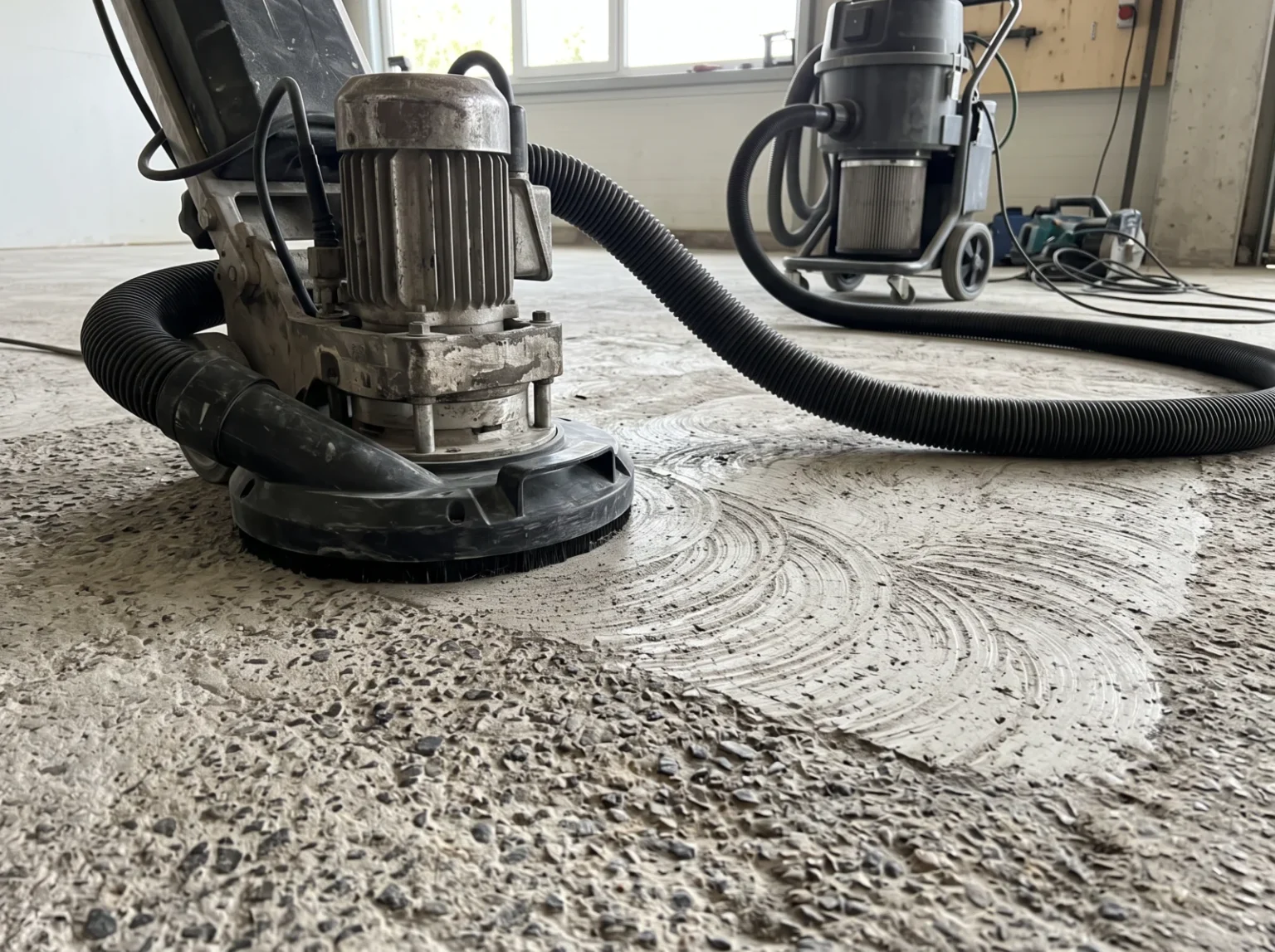
What Is Concrete Surface Preparation?
Concrete surface preparation is the work carried out before a coating system is installed. Depending on the condition of the slab and the selected system, it may involve mechanical preparation, cleaning, preparation or removal of suitable existing coatings, and treatment of damaged areas where required.
What that takes is not the same on every floor. Existing paint or coatings can change the scope, contamination can change the approach, and cracks or damage may need assessment and separate treatment.
The intended coating system matters too, because different systems are applied over differently prepared surfaces.
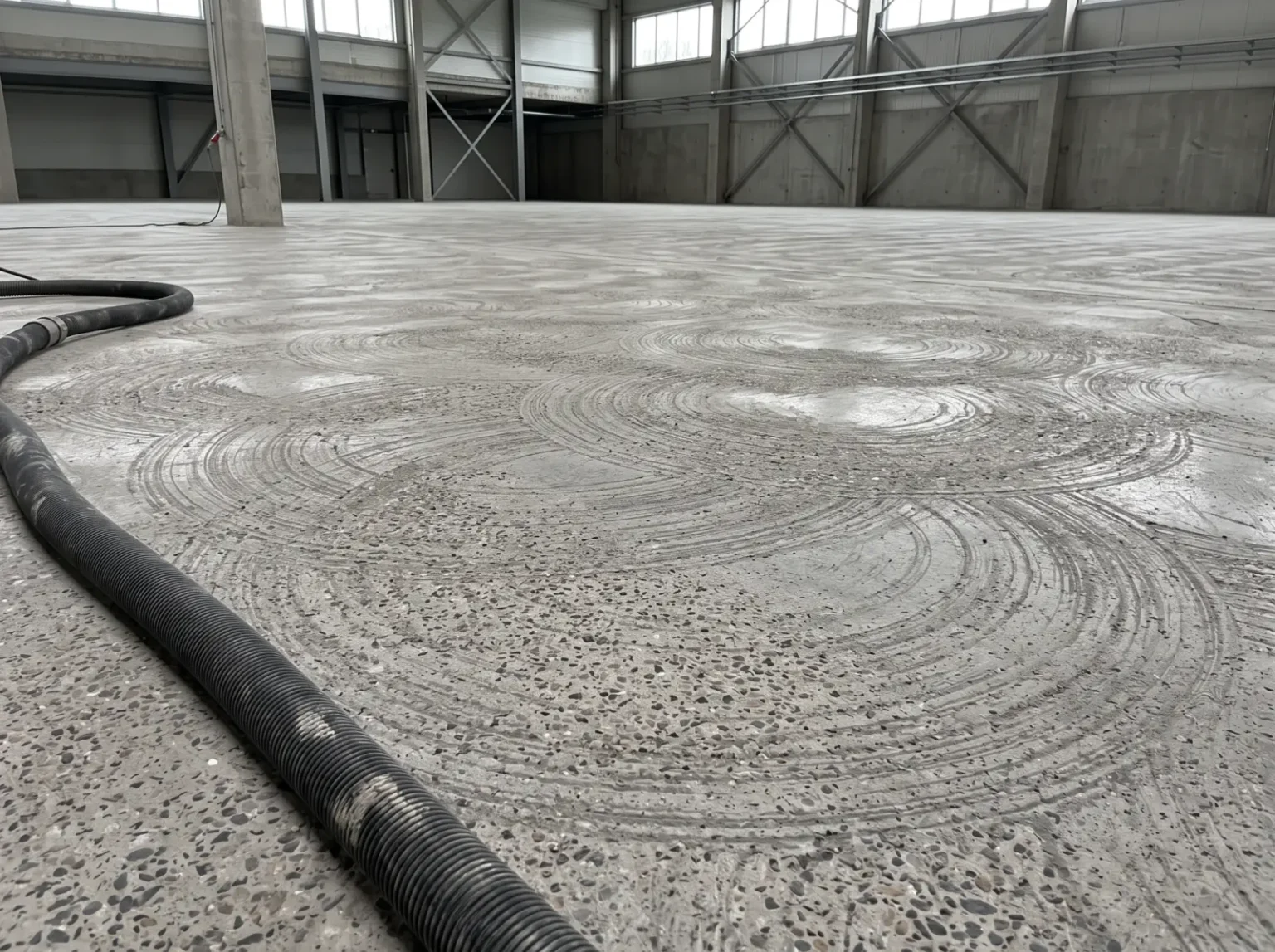
Why Preparation Matters Before Coating
Proper surface preparation is one of the biggest factors affecting coating adhesion and long-term performance. A coating system can only perform as intended when the substrate has been prepared appropriately for that system.
Adhesion depends on what the coating is being applied to, not only on the product itself.
A consistently prepared surface gives a more consistent installation across the floor.
Existing contamination left in place can affect how the coating behaves on that area.
An old coating interacts with a new system, so compatibility has to be considered.
Repairs are handled as part of preparation rather than left until the coating stage.
What Does Diamond Grinding Do?
Diamond grinding uses rotating diamond tooling to mechanically abrade the surface of concrete. Depending on the project, it can help remove or reduce suitable surface coatings or contaminants, open the concrete surface and create a more appropriate substrate for the selected coating system.
Diamond grinding is one common mechanical preparation method. It is not a universal answer to every floor condition, and the appropriate preparation method depends on the existing slab, coatings, contamination and selected flooring system.
When May Diamond Grinding Be Used?
Bare concrete before coating
Mechanical preparation may be required to prepare the surface for the selected system.
Previously painted or coated floors
Existing coatings may need assessment and mechanical preparation or removal depending on their condition and compatibility.
Surface contamination
Contamination needs to be assessed. Grinding may form part of preparation, but not all contaminants can simply be ground away.
Smooth or sealed surfaces
Existing sealers or smooth surfaces may require mechanical preparation before a new coating system can be considered.
Damaged floors
Grinding may be part of preparation, but damage itself may require separate repair or treatment.
The Slab Determines The Preparation
The preparation method should follow the actual condition of the floor rather than a one-size-fits-all process.
Bare concrete
The concrete is assessed for its overall condition, surface density and suitability for the selected coating system, then prepared accordingly.
Previously coated
What the coating is, how well it is bonded and whether it suits the new system all shape the scope.
Painted or sealed
Paint and sealers behave differently to each other, and both change how much preparation is needed.
Cracked or damaged
Damage is assessed and treated where required, separately from the surface preparation itself.
Contaminated or unknown
Existing coatings or materials should be identified and assessed before removal or mechanical preparation where required.
Dust Control During Mechanical Preparation
Mechanical concrete preparation can generate significant dust. Suitable extraction equipment helps capture airborne and loose dust at the source and keeps the work area cleaner during preparation.
Dust extraction helps reduce loose dust and contamination during surface preparation, which matters both for the site and for the surface the coating is going onto.
What If The Floor Is Already Painted Or Coated?
An existing coating should not automatically be coated over. Its condition, adhesion and compatibility with the proposed system need to be considered first.
What the existing material is, as far as it can be identified.
How well it is still bonded to the slab, and whether it is lifting anywhere.
Whether it is compatible with the system being considered.
Whether removal or mechanical preparation is appropriate, subject to assessment.
How much the scope may vary across the floor if the coating is patchy.
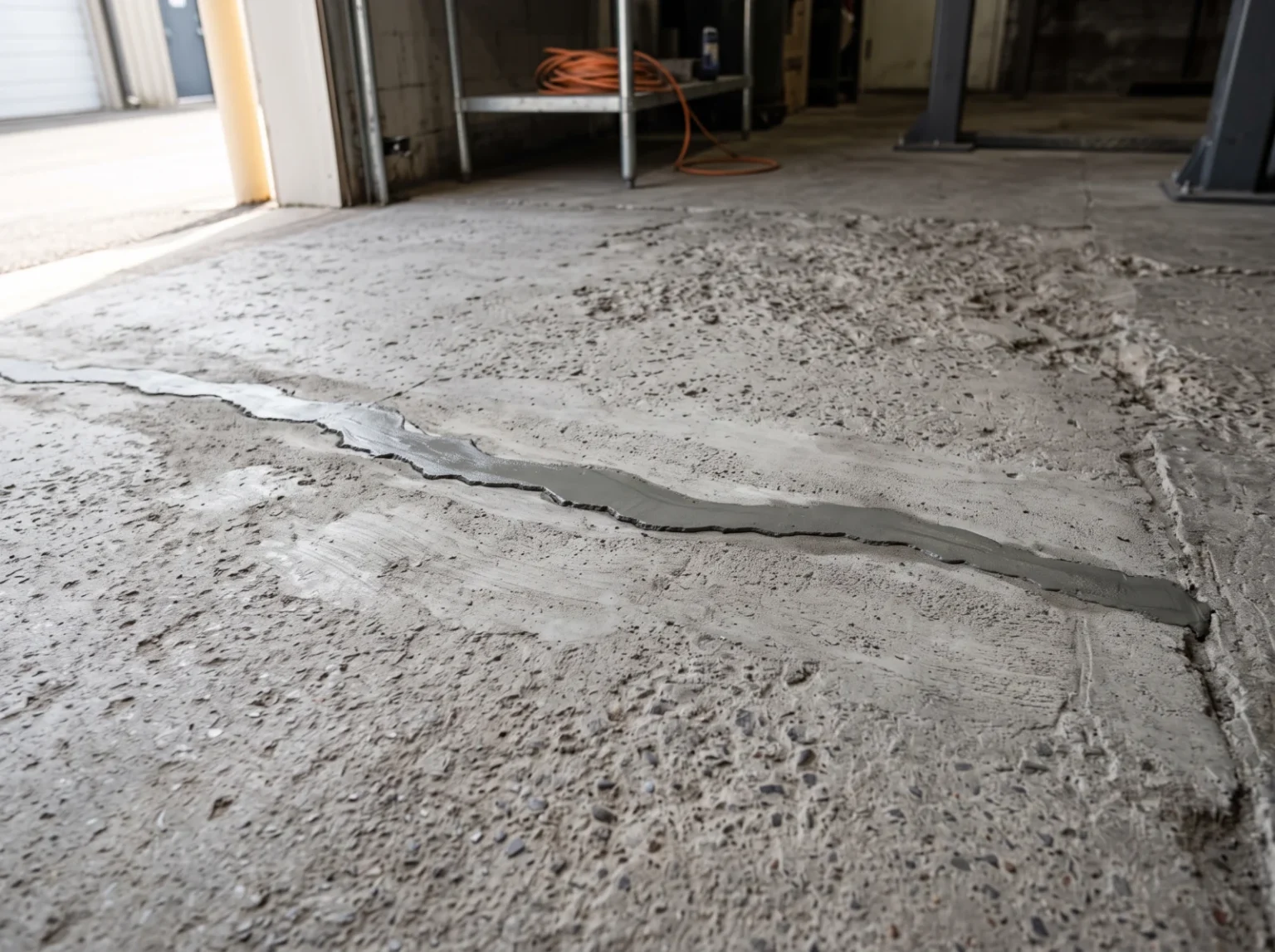
Cracks, Damage & Joints
Cracks and damaged concrete are repaired or treated where required, while joints are assessed and handled according to the selected flooring system.
Grinding does not repair a crack. Preparation and repair are different pieces of work.
Damaged concrete may require separate treatment before coating.
Joints are not all treated the same way, and their handling follows the selected system.
Where movement in the slab is suspected, specialist assessment may be required.
Treatment can address the existing crack or damage, but future slab movement may cause cracking or movement to become visible again.
How Surface Preparation Is Planned
Understand the project
Confirm intended use, coating direction and project requirements.
Assess the floor
Review existing concrete, coatings, damage and visible contamination.
Define the preparation approach
Determine what mechanical preparation, coating removal or treatment may be appropriate.
Prepare the substrate
Carry out the agreed preparation using methods suited to the floor and selected system.
Ready for the next stage
Once appropriately prepared, the floor can proceed to the next stage of the agreed coating system.
What Surface Preparation Does Not Automatically Solve
Mechanical preparation improves the surface for the intended coating process, but it does not automatically solve every underlying concrete or building condition.
Active structural movement
Significant structural concrete problems
Ongoing moisture issues
Severe contamination
Unknown hazardous materials
Underlying substrate failure
Preparation Across Different Floor Types
Garage floors
Existing slab condition
Paint or previous coatings
Vehicle use
Cracks and damage
Selected finish
Commercial floors
Traffic across the area
Operational use
Existing coatings
Access to the floor
Preparation scope
Industrial / higher-use floors
Floor condition
Operational demands
Equipment and traffic
Exposure conditions
Selected flooring specification
What Affects The Cost Of Floor Preparation?
Two floors of the same size can require very different preparation depending on what is already on the concrete and the condition underneath.
Total floor area
Condition of the concrete
Existing coatings
Number and type of coating layers
Contamination
Cracks and damage
Edges and floor details
Accessibility
Preparation method required
Disposal and cleanup considerations where applicable
Complexity of the agreed scope
Is Concrete Grinding A Standalone Service?
Concrete grinding may be required as part of a coating or floor-preparation scope. Whether EPOFC offers preparation as a standalone service for a particular project depends on the job requirements and current service scope. Send through the details and it can be confirmed for your floor.
Frequently Asked Questions
Preparation Is The Foundation, Not The Finish
Once the substrate has been appropriately prepared, the selected flooring or coating system can proceed according to the agreed project scope.
Concrete Surface Preparation Across Our Service Area
EPOFC currently focuses on concrete surface-preparation and flooring projects across Brisbane, Gold Coast, Logan and Ipswich. If your project is outside these areas, send through the suburb or postcode and current service availability can be confirmed.
Tell Us What Is On The Floor
Send through your suburb, approximate floor area, photos of the existing surface and details of any paint, coating, cracks or damage you can see. EPOFC can review the information and confirm the appropriate next step.
Related EPOFC Services
Explore related EPOFC services and coating options.
Garage Epoxy & Flake Flooring
Flake and epoxy systems for garages and suitable residential concrete areas.
Commercial & Industrial Floor Coatings
Systems for workshops, warehouses, storage areas and commercial premises.
Concrete Resurfacing & Repair
Cracks, spalling and worn concrete treated where repair is appropriate.