

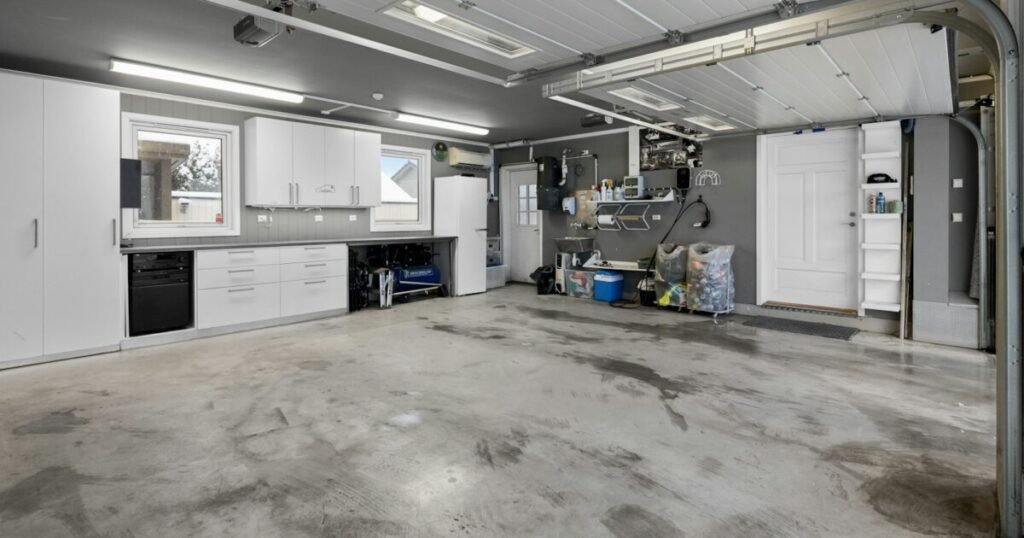
A coated garage floor looks like a simple upgrade from the outside: a grey slab goes in, a finished floor comes out. The work that decides how well that floor performs, though, happens long before anyone opens a tin. Most of a coating job is preparation, inspection and judgement about the concrete you already have.
Here is what a typical residential garage floor coating job involves, stage by stage, so you know what you are looking at when you get a quote and what will be happening in your garage while the work is under way.
1. The initial assessment
Everything starts with looking at the actual slab. No two garage floors are in the same condition, and the concrete is what dictates which preparation method and which coating system make sense.
An assessment usually covers:
- the size and shape of the area, including any step-downs, drains or door thresholds
- the condition of the surface: cracks, pitting, spalling, previous coatings, paint, adhesives or sealers
- signs of moisture coming up through the slab, or drainage running into the garage from outside
- oil, fuel and tyre staining, which can affect how a coating bonds
- access: how equipment gets in, where power comes from, and whether the door can stay open
This is also the stage where the finish gets discussed, because different systems suit different floors and different budgets. Our garage epoxy and flake flooring page runs through the options we work with.
2. Clearing the garage and sorting out access
The garage needs to be completely empty before work starts. That means the whole floor, not just the middle of it — coatings run to the edges, and anything left behind has to be worked around.
Typically you will need to move out:
- vehicles, trailers, bikes and mowers
- freestanding shelving, tool chests and storage tubs
- fridges, freezers and washing machines, including disconnecting them beforehand if they are plumbed in
- anything stored directly on the floor along the walls
Fixed cabinetry, benches and hot water units generally stay put and are masked and cut around instead. Grinding also needs power and ventilation, so the roller door usually stays open through the preparation stage, and dust extraction runs alongside the machine.
It is worth planning where the car will live for the duration of the job, and keeping pets and children out of the space while equipment and wet coatings are in there.
3. Inspecting the bare concrete
Once the floor is clear and swept, the slab can be properly examined. Things that were hidden under shelving and boxes tend to surface at this point: hairline cracks, patches of old sealer, a section where the surface has flaked away, or a damp corner near the door.
Moisture deserves particular attention. Concrete sits on ground that holds water, and moisture moving up through a slab can interfere with how a coating bonds. Where there is reason to suspect it, moisture is checked before committing to a system rather than after.
This inspection can change the plan. A floor that looked straightforward from the driveway may need more repair work, a different preparation approach, or a different coating system than first assumed.
4. Mechanical surface preparation
This is the stage that does the most to determine the outcome, and it is the one most often skipped in cheap jobs.
Concrete straight off the slab has a closed, smooth surface, often with laitance, curing compounds or old sealers sitting on top. A coating applied over that is bonding to the contamination rather than to the concrete. Mechanical preparation — usually diamond grinding, with shot blasting used on some floors — removes that top layer and opens up the surface so the coating can key into it properly.
What is involved:
- grinding the full floor area with industrial equipment running dust extraction
- working the edges and corners, where the main machine cannot reach, with a hand grinder
- removing existing coatings, paint, glue residue or sealers
- vacuuming the floor thoroughly, because any dust left behind sits between the concrete and the coating
Grinding is noisy and it is the dustiest part of the job even with extraction running, so it is worth telling the neighbours and closing internal doors. There is more detail on how we approach this on our concrete surface preparation page.
5. Repairs, where the concrete needs them
Grinding exposes the true state of the slab, so repairs generally follow preparation rather than precede it. Depending on what turns up, that can include filling cracks, patching pitted or spalled areas, rebuilding a crumbling edge along the door line, or levelling a low spot where water pools.
Repair materials need time to set before anything goes over them, and how long that takes depends on the product and the conditions on the day. Substantial repair work can add a stage to the job, which is why a quote given without seeing the bare, ground floor is an estimate rather than a firm figure. Larger-scale work of this kind is covered on our concrete resurfacing and repair page.
It is worth being clear about what repairs do and do not achieve. They restore a sound, even surface to coat. They do not make an old slab new, and a structural crack that is still moving is a different problem from a cosmetic one.
6. Applying the coating system
A garage floor coating is a system of layers rather than a single product, and the exact sequence depends on which system has been specified.
Primer or base coat
The first layer goes onto the prepared concrete and does the bonding work. It soaks into the opened surface and gives the following coats something consistent to sit on.
Flake broadcast, on flake systems
If you have chosen a flake finish, decorative vinyl flake is broadcast into the wet base coat by hand. Once it has set, the excess is scraped and vacuumed back, which is what produces the even, speckled surface. This stage is also what gives flake floors their texture.
Top coat
One or more clear or coloured top coats go over the top. This is the layer you actually walk and drive on, and it carries the sheen level — anything from a low satin to a high gloss.
Coating products are sensitive to temperature and humidity while they are being applied and while they set. In a Brisbane summer that can mean starting earlier in the day, and in cooler or damper weather it can mean waiting longer between coats. Your installer should tell you what they are working to on the day.
7. Curing and getting back into the garage
Coatings set in stages. A floor becomes touch dry first, then takes foot traffic, then takes vehicle traffic — and those three points are not the same day for every system.
How long each stage takes varies with the product used, the number of coats, the thickness applied and the temperature and humidity while it cures. For that reason it is not something to take from a blog post or a brochure. Ask for the actual return-to-service times for the specific system going onto your floor, and plan around those.
What is safe to say generally: the garage will be out of action for longer than the coating stage alone, you should not drag heavy items back in early, and rugs, mats or anything that traps moisture against a fresh coating are best kept off until the floor is fully cured.
What you should expect from the job
Across the whole process, a well-run garage floor job should involve:
- An inspection of the actual slab before a firm price is given, rather than a per-square-metre rate quoted sight unseen.
- Mechanical preparation as standard, rather than acid etching or a quick clean before coating.
- A clear explanation of the system being applied, including how many coats and what each one does.
- Specific return-to-service times for foot and vehicle traffic on that system, given in writing where possible.
- Honesty about the concrete, including where repairs are needed and where the existing slab limits what a coating can achieve.
- Aftercare advice covering cleaning and what to avoid on the new surface.
If a quote is noticeably cheaper than the others you have, it is usually worth asking exactly how the floor will be prepared. Preparation is the expensive, time-consuming part of the job, and it is where corners get cut.
Ready To Discuss Your Floor?
Tell us about your garage, driveway, workshop or warehouse floor and we will talk through the preparation it needs, the coating options that suit it and what the job would involve. Quotes are free and there is no obligation.